
President Donald Trump achieved a significant victory on Tuesday as the Senate confirmed Kevin Warsh to the Federal Reserve Board of Governors, positioning the former central banker to potentially become the public face of the Fed.
The Senate voted 51-45 to confirm Warsh to a 14-year term on the Federal Reserve’s seven-member board.
 (Update on Save America Act vote)
This appointment places one of Trump’s preferred economic advisors in a key position ahead of a separate vote later this week on whether he will officially succeed outgoing Fed Chair Jerome Powell, whom Trump appointed in 2018.
The confirmation marks a significant shift in Trump’s ongoing conflict with Powell regarding interest rates and monetary policy.
(Trump pushes new 2028 Republican — not JD Vance)
Trump has consistently criticized Powell for not aggressively lowering rates, even going so far as to label him a “moron” and a “stubborn mule” while the White House advocated for looser monetary policies to encourage economic growth.
This vote also increases scrutiny over the future direction of the Federal Reserve as Trump seeks to reshape the central bank with allies who align more closely with his economic agenda.
Warsh, 55, is well-acquainted with the Fed. A graduate of Stanford University and Harvard Law School, he previously served as a Fed governor from 2006 to 2011, including during the peak of the global financial crisis.
Since leaving the central bank, he has worked at Stanford’s Hoover Institution and has advised billionaire investor Stanley Druckenmiller.
Allies of the president have increasingly coalesced around Kevin Warsh as a stable but reform-oriented choice to lead the Federal Reserve after Powell’s term as chair expires Friday.
Warsh will assume the board seat previously held by Stephen Miran, a Trump adviser who joined the Fed last fall after an early resignation created an opening.
Miran’s official term ended in January, though he remained on the board pending confirmation of his successor.
Miran became known for consistently advocating lower interest rates during his time on the Federal Open Market Committee.
He dissented from every rate decision this year after the committee opted to keep rates unchanged, arguing instead for cuts.
During the Fed’s final meetings of 2025, Miran also pushed for deeper reductions.
Warsh has likewise been critical of the Federal Reserve in recent years, taking aim at the size of the central bank’s balance sheet, its communications strategy, and its regulatory policies.
Though once regarded as more hawkish on inflation, Warsh has recently indicated he could support interest rate cuts under certain economic conditions.
But that said, he also told senators during his confirmation hearing that he wouldn’t be acting as a political operative for the president, sticking only to Trump’s economic demands, adding that he’s never been asked to do that in the first place.
“He never asked me to predetermine, fix or decide on any interest rate decision, nor would I ever do so,” Warsh told senators last month. “I will be an independent actor if confirmed as chair of the Federal Reserve,” he added.
The confirmation battle took place amid increasing controversy surrounding Powell, who has been under mounting pressure and uncertainty due to a criminal investigation that has cast a shadow over the final months of his tenure.
Warsh’s term on the board will last until 2040, potentially granting Trump’s Federal Reserve nominee significant influence over U.S. monetary policy for many years.
Meanwhile, Trump expressed his continued interest in inspecting Fort Knox to personally verify the presence of the nation’s gold reserves, which are valued at nearly $700 billion.
This comes in light of concerns raised last year regarding the security of the highly protected bullion depository.
“We wanted to go and knock on the door of Fort Knox — a very thick door — and to see whether or not we have any gold in there,” Trump told “Full Measure with Sharyl Attkisson” in a wide-ranging interview that was aired on Sunday.
BREAKING: Judge Delivers Ruling on $5 Million-Per-Resident Reparations Fund
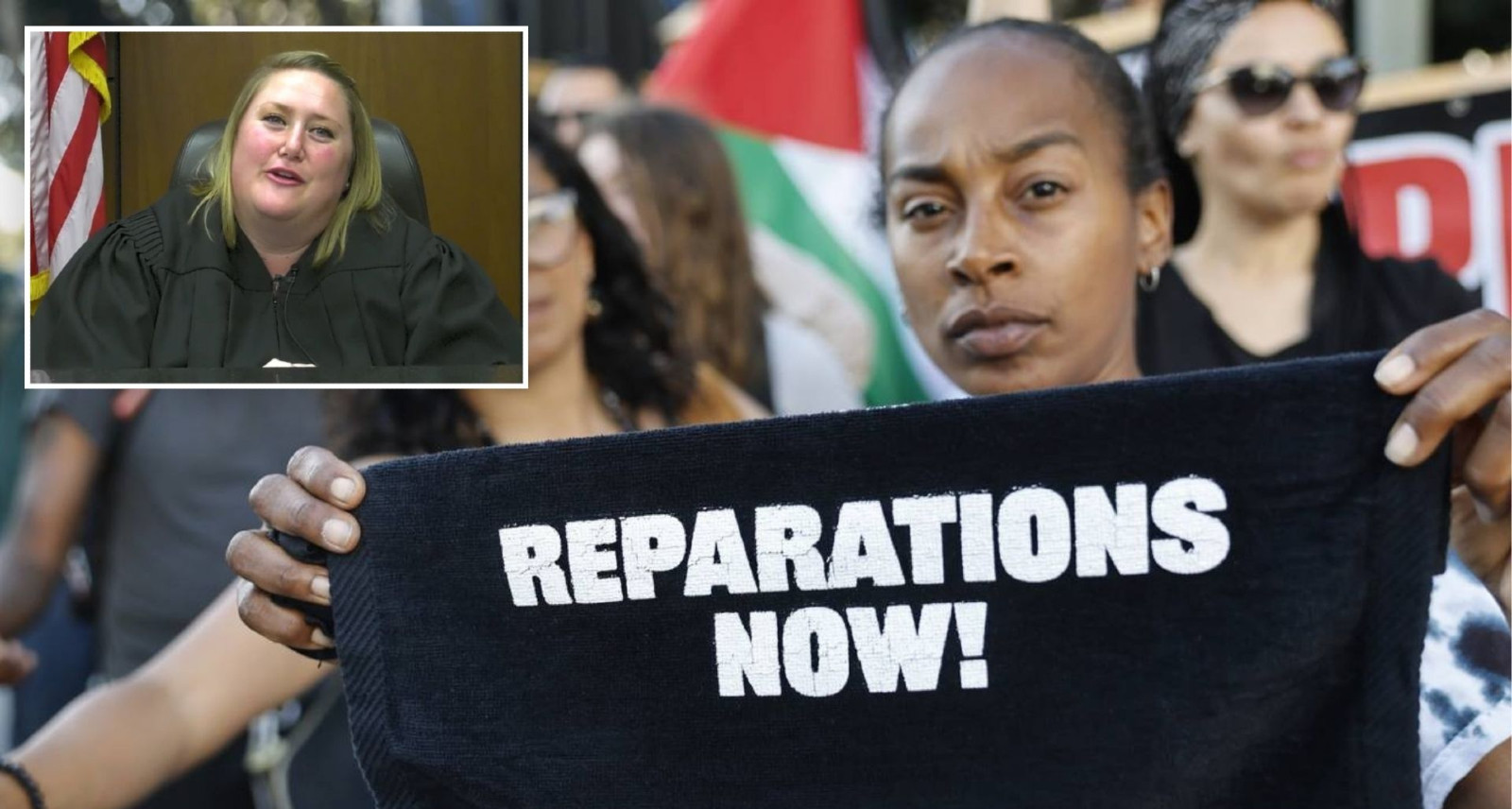 Judge Joseph Quinn of the San Francisco Superior Court said that a lawsuit against the city’s race-based reparations fund is too early and upheld a demurrer against the suit.
A demurrer is an objection that says the evidence presented was not enough for the judge to review.
“We are disappointed by the Superior Court’s ruling, but remain undeterred. The government cannot use taxpayer money to administer funds for programs that discriminate based on race.
The next step will be to either amend the complaint or appeal,” a Pacific Legal Foundation spokesperson told Fox News.
The Pacific Legal Foundation was also given leave to amend by Quinn. This meant that they could fix any mistakes in their case.
A group of people from the Pacific Legal Foundation, some San Francisco residents, and the Californians for Equal Rights Foundation sued the city of San Francisco over an ordinance that sets up a fund for Black residents.
The lawsuit says the ordinance is racist because it lets taxpayer money go into the fund and not other funds.
The plaintiffs said that a win would keep taxpayers from having to pay for a race-based program run by the government and set limits for other cities that want to use similar policies.
Reports say that Quinn wasn’t persuaded by claims that the reparations plan is racist.
He said that there isn’t enough proof yet to know if using the program would have racial effects.
“Both the United States and California Constitutions forbid this,” the nonprofit says in its complaint.
“Government may not allocate benefits, opportunities, or burdens according to race or lineage,” the nonprofit added in its complaint.
“This is a taxpayer standing challenge at the pleading stage against an ordinance that assigns a public agency, a taxpayer-funded agency, with the responsibility of administering a fund for an unlawful purpose,” said Andrew Quinio, an attorney with the Pacific Legal Foundation.
“How do you know that?” Quinn asked, pushing back on the claim that reparations would be distributed unlawfully.
According to Courthouse News, “Quinn and Quinio had a rousing back-and-forth about taxpayer standing and other issues. Quinn asked whether ‘a possibility that something race-conscious is going to happen’ was enough to bring a claim.”
“Quinio said yes, it was sufficient,” the outlet reported.
“‘No, it’s not,” Quinn replied.
“‘There’s no authority for that.’ He noted that if that were true, ‘then we would have thousands of taxpayer actions, challenging all kinds of laws that citizens disagree with because something might happen under that law.’”
Quinn is said to have said that the plaintiffs would have to show that the ordinance was illegal in every way it could be used to properly challenge it, as long as the plan had one option that wouldn’t be based on race.
Jerry Brown, who used to be the Democratic governor of California, chose Quinn.
Fox News Digital asked San Francisco officials and Californians for Equal Rights for comments, but they did not respond.
In December, Democratic Mayor Daniel Lurie signed an ordinance that sets up a reparations fund.
One day, each of the city’s eligible Black residents could get up to $5 million to make up for alleged discrimination and displacement in the past.
The Board of Supervisors passed the law in December, and Lurie signed it two days before Christmas.
The law set up the framework for the fund, but it didn’t give money or guarantee payments.
The fund can use donations from individuals, foundations, and other non-city sources.
Taxpayers would need a law, a clear source of funding, and the mayor’s approval for any reparations payments that they pay.
This article may contain commentary which reflects the author’s opinion.